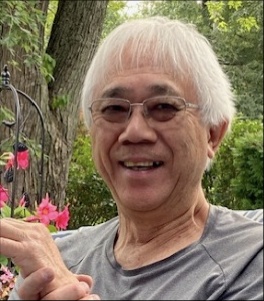
About the Author: Kaz
Why this book? Why now?
There is a Japanese proverb that states, The stake that sticks up gets hammered down. That is how most first-generation Japanese Canadians conduct their lives. Avoid open dissent. Furthering that mindset, my parents taught us to not discuss issues that were upsetting. Remain calm, be compliant, and work hard. Your honour was your reward.
After the Second World War, a sizeable number of Japanese Canadians were forcibly interned in a detention centre called Neys, in Northern Ontario. My family and I were part of this group. The living conditions we endured were deplorable, in fact, life-threatening. Yet, as honourable Japanese Canadians, we remained calm. We were compliant. And over the years we rarely discussed this shameful segment of our lives. Well, most of the family didn't.
Back in my late teens I remember my mother coming to me visibly upset. The local grocery store was advertising "Jap oranges" for sale in the newspaper. Although she would never ask, I strongly sensed that she wanted me to do something about it. Being a second-generation Japanese Canadian, I didn't always adhere to the Japanese proverb mentioned earlier and my mother knew that. So, I took action. I complained to the Human Rights Commission. The matter was resolved much to my mother's relief.
Yet, a few years later while I was in my final year of university, I announced that I was researching and writing a paper on the unjust internment of Japanese Canadians during the war. My mother shook her head in opposition. It was too much. Basically, she was saying don't dishonour the family name and heritage. Keep quiet. But I did it anyway.
The paper was eventually published on the front page of both the Japanese American and Japanese Canadian national newspapers. I am not sure that my family was pleased, but I was. It accomplished what I hoped it would. It exposed the injustices suffered by Japanese Canadians as mandated by the federal government.
Decades later, I now realize, to this day no impact statement has ever been heard regarding what happened to us in Neys. It is time. I am voicing dissent. It is my hope that my sisters, my brother, the spirits of my parents and all Japanese Canadians who were interned in Neys will, through the pages of this story, be recognized for the pain and the suffering they endured.
Sincerely,
Kaz Miyata
Kaz's Biography
In 1949 my family and I were granted permission by the Canadian Government to leave Camp 72 (near Neys) to settle wherever we chose. Because we were penniless and in ill health, we chose the city of Fort William (now known as Thunder Bay) as it was the closest city to Neys. We ended up in the East End which was a community mostly comprised of lower to little income families like ours, struggling to establish a new life in Canada.
Several Japanese Canadian families from Neys and other detention camps also settled in the East End. After years of incarceration and isolation, the large presence of Japanese Canadians around me allowed for a fairly smooth adjustment to city life. This sense of acceptance followed me into elementary school.
However, once I started high school the cultural shock of being a minority hit home. Only a very small number of my East End buddies attended this high school. We definitely stood out physically and by the clothes we wore in comparison to the rich middle class white students from the "other side of the tracks". I was semi-accepted by this new high school group because of my strong athletic skills in the community baseball and hockey systems. In my final high school year I played Junior 'A' hockey much to my mother's opposition. She preferred that I focused on getting good grades to get into university. I made a pact with her that if my grades dropped, I would leave Junior 'A' hockey. She won.
The following year I attended Lakehead University and my years there were the most rewarding and enjoyable of times. The diversity of both the student and faculty members eliminated any thoughts of discrimination. In my second year of university I was asked to join the varsity hockey team to which my mother gave her permission. I was the starting goal tender. I'm proud to say our Norwester team won the National Association of Intercollegiate Athletics (N.A.I.A.) championship. The N.A.I.A. is an umbrella group of the NCAA which is the governing body for all college and university athletic programs in the United States. To date that team is the only Canadian male varsity team to win an NCAA title.
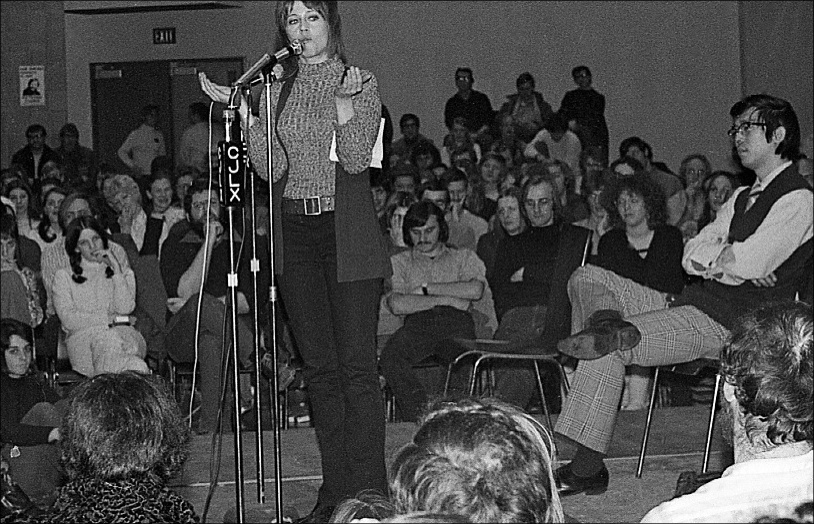
In my final two years at Lakehead I was elected vice-president of the student union. This position empowered me to bring in guest artists. I investigated and invited well known musicians like Santana, Gordon Lightfoot, and Bachman Turner Overdrive to the campus as well as controversial political activists and justice seekers like Jane Fonda, Dick Gregory, and Allen Ginsberg. The position held a lot of responsibility, and it was a very significant time for me.
I graduated with an Honours Bachelor of Arts degree, received the President's Medal for service to the University community and was inducted into the University's Athletic Wall of Fame. At my graduation I went up to my mother, gave her a big hug and kiss, and thanked her for being so persistent with me about going to university.
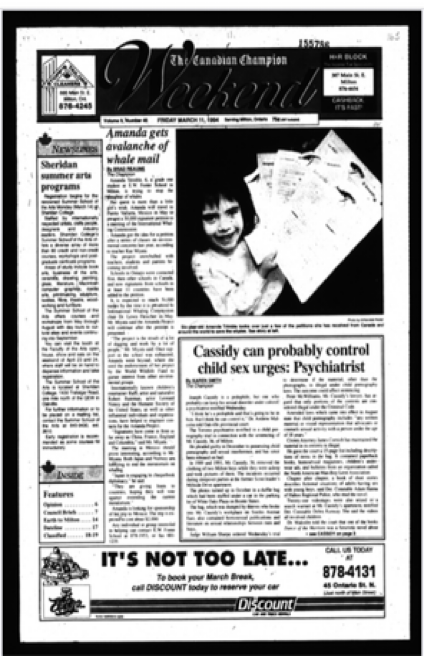
I then enrolled at Hamilton Teachers' College and graduated the following year with my Primary Specialist Teaching Certificate. I was immediately hired by the Halton Board of Education and taught primary grades for 28 years, the last 20 years in kindergarten. As a kindergarten teacher my year-round curriculum focus was on environmental issues. During a class discussion on endangered species one of my students expressed her desire for people to stop killing the whales. From this the Amanda Project petition was born and it became a global phenomenon garnering over one hundred thousand student signatures from over 45 countries. We raised funds to send five-year-old Amanda to present these signatures to the International Whaling Commission in Puerto Vallarta, Mexico. Consequently, its members voted not to lift the worldwide moratorium on whale hunting. (Article below). Ten years later the humpback whales were removed from the endangered species list. I learned then that teaching does make a difference in ways we can't possibly imagine.
Yet, my biggest personal reward from teaching was meeting my wonderful future wife, Cathy, who was also a teacher with the Halton Board. The birth of our two children were precious experiences that words cannot describe. Sarah and her thoughtful husband Zack, and Kellen and his new bride Megan round out our lives. And of course, our lovely granddaughter, Everley. What a treasure!
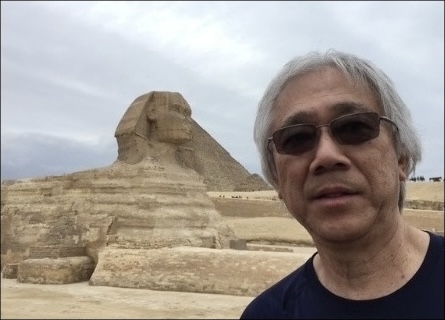
Since my retirement from teaching I have co-authored a book with my wife titled The Reading Edge which is a phonetic approach to teaching children to read. We have also travelled extensively. One highlight was being hired as a primary consultant by a private school in Cairo, Egypt to work with their staff. Several trips were required and this gave me the opportunity to fulfill my lifelong dream to see the Giza Pyramids, the Sphinx, the Valley of the Kings and Petra, Jordan.
For the past several years my wife and I have been busy picking up our granddaughter from school and enjoying our time with her.
I sincerely hope you find our book Destination: Neys to be an interesting and powerful commentary on the injustices government has and can do to innocent citizens.
↑ Back to top